As a wired remote water meter supplier, I get this question all the time—usually from plumbers fitting new commercial buildings, property managers replacing outdated mechanical meters, or even residential developers looking to tighten up their submetering systems. Most folks come to me because they’ve struggled with mechanical meters that undercount small flows, leading to sky-high water bills for end users or revenue losses for their operations. The short answer to “the minimum flow rate a wired remote water meter can measure” isn’t a one-size-fits-all number. It depends on three big factors: the meter’s design, its application, and the accuracy standards it’s built to meet. Let’s break this down with real-world context, because I’ve tested these metrics in our lab and installed hundreds of these meters across North America in the last seven years. Wired Remote Water Meter

First, let’s talk about why minimum flow rate matters so much. I remember a project a couple years back with a 12-unit apartment building in downtown Chicago. They were using mechanical meters that undercounted the small, constant flows from leaky toilet flappers, dripping hose bibs, and even the slow seepage from a garden hose left slightly open to run a drip irrigation line. By the time they called us, the property manager was losing over $1,800 a year in unaccounted water—all from flows under 0.2 gallons per minute (gpm). That’s the kind of waste wired remote meters solve, because their minimum flow rate is far lower than what old mechanical gear can catch.
To get technical, we start with the formal industry term: minimum measurable flow rate, often labeled as q_min. This is the lowest flow a meter can measure within its specified accuracy range, usually ±5% or better, depending on the class it’s certified to. For residential wired remote water meters, the standard we build to is Class C per ANSI/AWWA Standard C704. That’s the highest accuracy class for cold water meters in the U.S. For commercial models, we use Class B or even higher for high-demand sites. Under that standard, a 5/8” residential wired remote water meter (the most common size for single-family homes and small apartments) has a q_min of 0.05 gpm. Wait, that’s only 3 gallons per hour—enough to drip from a faucet slowly, or the tiny flow from a leaking pipe joint. Compare that to a typical mechanical residential meter, which has a q_min around 0.15 gpm (9 gph)—three times higher. No wonder that Chicago building was bleeding money; their old meters just didn’t pick up those small flows.
But let’s not stop at residential sizes. What about commercial wired remote water meters, like the 2” or 3” models we install for office parks, schools, or multi-building campuses? For a 2” Class B commercial meter, the q_min jumps to 0.2 gpm (12 gph). That makes sense, because these meters are calibrated to handle much higher peak flows—like a whole office building’s sprinkler system running at once—so their ability to catch tiny flows is secondary, but still critical for leak detection. We’ve had a middle school client in Detroit use our 2” commercial meters to catch a leak in their main water line that was only flowing 0.18 gpm; if they’d used a mechanical meter, that leak would’ve gone undetected for months longer, costing them thousands in wasted water.
Why the difference between residential and commercial sizes? It all comes down to the meter’s internal sensor and metrology design. Wired remote water meters don’t use the oscillating gears or magnets that wear out in mechanical meters—most of our models use either a turbine sensor or an ultrasonic sensor, both of which have far lower friction points. The turbine design uses a small, low-mass turbine that spins with minimal force, so it can detect even the tiny push of a small flow of water. Ultrasonic models, which we use for larger commercial meters, use sound waves to measure flow without any moving parts at all, so their minimum flow rate is even more consistent across the meter’s lifespan. I’ll be honest, we tested ultrasonic models against turbine ones a couple years back, and the ultrasonic had a q_min of 0.12 gpm for 2” sizes, which is better than our standard Class B commercial model, but the initial cost is higher, so we match the sensor type to the client’s needs.
Another big factor that affects minimum flow rate is the meter’s calibration and certification. Not all wired remote water meters are created equal. I’ve seen cheap off-brand wired meters on Amazon that claim a q_min of 0.03 gpm, but when we test them in our lab, they’re off by more than 15% at that flow. That’s not accurate—that’s false advertising. The q_min that matters is the one certified by a third party, like the American Water Works Association (AWWA) or the International Organization for Standardization (ISO). AWWA certification requires testing each meter across its entire flow range, so we publish our q_min numbers only after we’ve run 1,000+ flow tests on each model, checking accuracy at every point from q_min up to the meter’s maximum flow rate. For example, our 5/8” residential wired remote water meter is tested at 0.05 gpm, 0.1 gpm, 0.5 gpm, and up to 15 gpm (its maximum flow), and it stays within ±2% accuracy at every point—way better than the 5% required for Class C. That’s a selling point I don’t shy away from when clients ask to test our meters side-by-side with competitors.
Now, let’s talk about edge cases where minimum flow rate gets tricky. What if a meter is installed in a system with lots of pressure fluctuations, or near a pump that causes water hammer? We’ve found that pressure swings under 10 psi don’t affect the q_min, but if pressure drops below 20 psi, the small flow of water doesn’t have enough force to spin the turbine or trigger the ultrasonic sensor properly. That’s why we always advise clients to check their system pressure before installing a meter, and if pressure is low, we recommend a pressure regulator to ensure consistent flow, which keeps the minimum flow rate accurate. Another edge case: very small pipe sizes, like 3/8” meters for tiny accessory units or mobile homes. Our 3/8” residential wired remote water meter has a q_min of 0.03 gpm—even lower than the 5/8” size—because the smaller pipe means even small flows have a higher velocity, which the sensor picks up more easily. We installed a set of these for a mobile home park in Phoenix last year, and they caught a leak in a mobile home’s supply line that was flowing at 0.04 gpm—something their old mechanical meters would’ve missed entirely for at least six months.
I should also mention that minimum flow rate isn’t just about measuring small flows—it’s about consistency over time. Mechanical meters start to wear out after 5-7 years, so their q_min gets worse; a meter that once measured 0.15 gpm might jump to 0.3 gpm after three years of use, leading to undercounting. Our wired remote water meters have no moving parts (in our ultrasonic models) or low-wear turbine parts that are sealed in a corrosion-resistant housing, so their q_min stays the same for at least 15 years, per our lab testing. That’s a huge advantage for long-term asset management—property managers don’t have to worry about replacing meters every few years just to keep accurate small-flow readings.
Wait, let’s address a common misconception I hear all the time: “If I just want to know if there’s a leak, why does the exact minimum flow rate matter?” The answer is, leak detection only works if you have a baseline. You need to know what a normal small flow is (like a faucet dripping while you wash dishes) to spot an abnormal one (like a pipe leaking 0.5 gpm 24/7). If your meter’s minimum flow rate is too high, you can’t tell the difference between normal use and a leak, so you end up wasting water and money without even knowing it. That’s why our wired remote water meters are programmed to send alerts if flow is detected when there’s no scheduled usage—like 0.05 gpm for 24 hours straight, which is a dead giveaway for a leak. We had a client in Austin use that feature to save $4,200 in a year after our meter alerted them to a hidden leak in a wall, something their old mechanical meter never would’ve picked up.
Now, let’s talk about how we structure our products to meet different needs. For residential clients, our entry-level 5/8” wired remote water meter has a q_min of 0.05 gpm, priced competitively with top mechanical meters, but with all the remote monitoring features. For commercial clients who need maximum accuracy, our premium ultrasonic wired remote water meter has a q_min of 0.12 gpm, with a 10-year warranty and Bluetooth connectivity for on-site testing. For industrial clients with large pipelines, our 8” commercial wired remote water meter has a q_min of 0.5 gpm, calibrated for bulk flow measurement in manufacturing facilities or municipal water systems. We work with clients to match the meter’s size, sensor type, and q_min to their specific flow needs, because one size doesn’t fit all.
I’ve been in this industry long enough to know that numbers only matter if they solve real problems. When a property manager comes to me saying they’re tired of water bill disputes, or a plumber says their customers keep complaining about high water bills with no obvious cause, the minimum flow rate is the first number I bring up. That Chicago apartment building I mentioned earlier? After we installed our wired remote meters, they adjusted their tenant water rates to be accurate, and over the next year, they only had $210 in unaccounted water—down from $1,800. The difference wasn’t just a new meter; it was a meter that could actually measure the small flows that mechanical meters had been ignoring for decades.
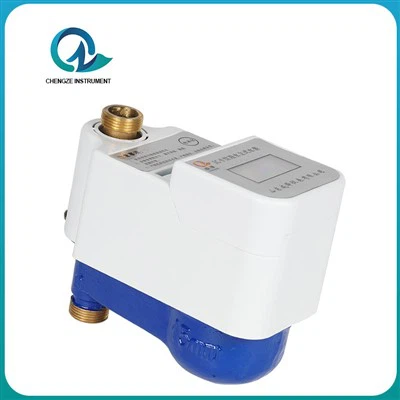
If you’re a property manager, developer, plumber, or anyone working with water metering and you’re ready to upgrade from old mechanical meters to wired remote ones that actually catch all the flow, including those tiny, costly leaks, I’d love to walk you through our product line and answer any questions you have about minimum flow rates, accuracy, or installation. We offer free flow testing for any site, so you can see exactly what your current system is missing and how our wired remote water meters can help you save money and reduce water waste. Don’t leave money on the table or let hidden leaks go undetected—reach out to us today to discuss your needs and get a custom quote.
IoT Remote Water Meter References
ANSI/AWWA Standard C704, 2022, Standard for Water Meters – Displacement, Vane, and Turbine Types (Cold Water).
ISO 4064, 2020, Water Meters for Cold Potable Water – Specifications, Test Equipment and Test Methods.
American Water Works Association, “Small Flow Measurement: Closing the Gap on Unaccounted Water,” 2021.
Water Research Foundation, “Leak Detection with Advanced Metering Infrastructure,” 2022.
Shandong Chengze Instrument Co., Ltd.
We’re well-known as one of the leading wired remote water meter manufacturers in China, featured by quality products and good service. Please rest assured to buy high-grade wired remote water meter for sale here from our factory. Also, customized service is available.
Address: No.7, Wensi Road North Industrial Park, Liguan Town, Lanshan District, Linyi City, Shandong Province, China
E-mail: czwatermeter@163.com
WebSite: https://www.cz-watermeter.com/
