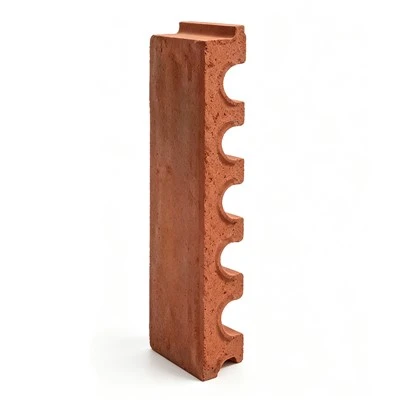
If you’re a architect, construction manager, or building owner weighing exterior cladding options, you’ve likely stumbled on adjustable single-strip interlocking terracotta systems—they’re durable, low-maintenance, and instantly add that timeless, premium facade finish that doesn’t date quickly. But one question almost always leads the chat: How much does this system actually cost? As a supplier who’s worked with hundreds of projects from small residential renovations to large commercial builds over the past decade, I’m here to break this down honestly, no generic sales pitches, just the real numbers that impact your bottom line. I’ll skip the industry jargon, too—this is the stuff I wish I could’ve told my first client when I was starting out, back when I was still figuring out how to price jobs without undercutting myself or leaving a gap in quality. Adjustable Single-Strip Interlocking Terracotta System

First, let’s get one thing straight: there’s no one-size-fits-all number here. An adjustable single-strip interlocking terracotta system’s cost hinges on four big factors that shift for every project. Let’s walk through each, because missing even one can throw your budget way off.
First up, material grade. Not all terracotta is the same, and that’s where most hidden costs live. The standard for our systems is natural fired terracotta made from local clay, which is fired in kilns at 1,100°C to 1,200°C. That’s the sweet spot for strength and fade resistance—these strips don’t crack in freeze-thaw climates, and they hold their color for 50+ years without needing repainting. But we also offer two premium grades: one is “weather-resistant terracotta” for coastal or high-humidity areas, which has a lower porosity (less than 2% water absorption, compared to 5% for standard) to prevent salt damage, and another is custom-colored terracotta, fired with mineral oxides instead of synthetic pigments. Here’s the price split: standard terracotta strips run $12 to $18 per linear foot (lf). Weather-resistant is $18 to $24 per lf, and custom-colored is $22 to $30 per lf. Why the gap? It’s not just the clay—it’s the firing time, which can add 20% to production costs for those specialized runs. Last year, I worked on a coastal hotel in Florida that switched from standard to weather-resistant after a test strip started showing salt erosion in three months; they ended up paying $3.50 more per lf, but saved $12,000 in premature replacement costs two years later. That’s the tradeoff, right? Cheaper upfront often means costlier down the line.
Next, the adjustable mounting system itself. This isn’t just a bracket to hold the terracotta up—it’s what lets you align the strips perfectly, even if your building’s wall is slightly uneven (and let’s be real, almost no commercial or residential walls are perfectly plumb). Our adjustable system is made from marine-grade aluminum, which is corrosion-resistant, and has a 150-pound weight capacity per bracket. You can adjust horizontal and vertical position by up to 2 inches, which saves you on installation labor—no need to grind down concrete walls or add custom furring strips to fix gaps. The cost here depends on the height of your building and wind load requirements. For low-rise projects (stories 1 to 3, wind speeds under 80 mph), mounts run $3 to $5 per lf. For mid-rise (4 to 10 stories, 80 to 110 mph), that jumps to $5 to $8 per lf, and high-rise or hurricane zones (11+ stories, over 110 mph) are $8 to $12 per lf. I’ve seen contractors try to cut corners here with cheaper steel mounts, but those rust out in 7 to 10 years. Last year, a residential building in Texas used a low-grade mount; after a few summer storms, 12 strips fell loose, and the repair cost was three times what they would’ve paid for our aluminum mounts. That’s a lesson I repeat to every client: the mounting isn’t just part of the system—it’s what keeps it safe.
Then there’s installation. This is where I see the most confusion. A lot of clients ask, “Can I install this myself to save money?” The short answer: yes, but only if you have experience with facade work. For professionals, installation rates for our system are $10 to $18 per lf, depending on access. If your building has scaffolding, that’s a fixed fee, but if you need suspended scaffolding or a crane for upper floors, that adds $2 to $4 per lf. For DIYers, the system is pre-cut with interlocking edges and comes with a step-by-step guide, but I’d only recommend that for small projects—like a 1,000 lf residential facade. Even then, I tell them to hire a pro to do a 100 lf test run first; misaligned strips look sloppy, and fixing that after the whole facade is up is way more work. Last year, a DIY homeowner tried to do their garage facade, skipped the test run, and ended up with 20 misaligned strips that cost $800 to repair—way more than they would’ve paid a pro for the whole job.
Wait, there’s another factor: extras. Things like trim pieces, corner finishes, and waterproofing membranes. A lot of suppliers don’t include these, but we do, because skipping them causes water damage. Trim pieces for corners and window edges run $4 to $7 per linear foot, and waterproofing membranes for the back of the system (to protect the building’s wall) are $2 to $3 per lf. If you’re doing a complex facade with curves or multiple angles, custom trim adds another $5 to $10 per lf. I always tell clients to budget 10% of their total material cost for extras—last minute needs pop up, and it’s way better to have that buffer than to pause your project mid-install.
Now, let’s put this all together with real-world examples to make it concrete. Let’s take three common projects: a small residential renovation, a mid-rise office building, and a coastal restaurant facade.
First, a 1,500 lf residential facade (standard grade, low-rise, standard mounts, no complex angles): Materials: $12 to $18 per lf x 1,500 = $18,000 to $27,000. Mounts: $3 to $5 per lf x 1,500 = $4,500 to $7,500. Installation: $10 to $18 per lf x 1,500 = $15,000 to $27,000. Extras: 10% of materials = $1,800 to $2,700. Total: $39,300 to $64,200. That’s a range, but it’s realistic—last year, we did a 1,400 lf home in Portland for $41,200, which landed right in the middle.
Second, a 10,000 lf mid-rise office (standard grade, mid-rise mounts, some complex corners): Materials: $15 per lf (midpoint) x 10,000 = $150,000. Mounts: $6 per lf (midpoint) x 10,000 = $60,000. Installation: $14 per lf (midpoint) x 10,000 = $140,000. Extras: $15,000. Total: $365,000. That’s the kind of project we do all the time in downtown areas—last quarter, a Chicago office hired us for this exact build, and they stayed right on that budget.
Third, a 3,000 lf coastal restaurant (weather-resistant grade, high-rise mounts, custom color): Materials: $21 per lf (midpoint of weather-resistant) x 3,000 = $63,000. Mounts: $10 per lf (high-rise) x 3,000 = $30,000. Installation: $16 per lf (scaffold access) x 3,000 = $48,000. Extras (custom trim): $5,000. Total: $146,000. That’s a premium project, but coastal areas need that extra durability—we don’t cut corners on salt exposure here.
Now, let’s talk about long-term value, because that’s what most clients miss when they’re comparing upfront costs. A terracotta system lasts 50 to 60 years, with almost no maintenance—just a power wash every 5 to 10 years, which costs $0.50 to $1 per lf. Compare that to vinyl siding, which costs $3 to $5 per lf to install, and needs replacement every 20 to 25 years—so over 50 years, vinyl would cost you $7,500 more per 1,500 lf than terracotta. That’s the big picture: you’re not just paying for a facade, you’re paying for something that pays for itself over time.
I also get asked a lot about bulk discounts. For projects over 50,000 lf, we can adjust pricing—usually 5 to 10% off materials, because we can run larger kiln batches. That’s a no-brainer for big commercial builds. For smaller projects, like under 1,000 lf, we have a small-project rate that cuts 2% to cover extra handling, since those orders are smaller.
Wait, let’s clear up a common myth: some suppliers advertise “$8 per lf terracotta systems,” but that’s usually the terracotta strip alone, without mounts or installation. Those hidden fees add up fast—by the time you add mounts and installation, you’re paying more than our standard grade. We’re transparent about every line item, so you don’t get sticker shock halfway through your project.
Now, if you’re trying to narrow down your specific cost, the best thing you can do is send over your project details: building height, location, square footage of the facade, any custom needs (colors, angles, coastal requirements), and access for installation. I’ve spent 10 years on this, so I can give you a precise, no-obligation quote in 24 to 48 hours—no fine print, no pressure.
If you’re still weighing options, let me tell you what I tell every new client: don’t just look at the upfront number. Ask about material warranty (we offer a 20-year warranty on our strips and mounts, which is standard in the industry), installation quality, and long-term maintenance. A cheap system today can cost you thousands in repairs down the line, and that’s never worth it.
Whether you’re a architect drafting a new residential development, a construction manager working on a commercial build, or a homeowner updating their property’s facade, the adjustable single-strip interlocking terracotta system is an investment that stands the test of time. The cost varies, but with the right breakdown, you can plan a budget that works for your project without sacrificing quality.
If you’d like to discuss your specific project needs, receive a customized quote, or ask any follow-up questions about materials, installation, or long-term value, feel free to reach out to our team to coordinate a conversation tailored to your goals.
Construction Materials References
- Clay Construction Association. (2022). Terracotta Facade Systems: Performance and Cost Benchmarks.
- National Association of Home Builders. (2023). Exterior Cladding Longevity and Maintenance Costs.
- International Code Council. (2021). Wind Load Requirements for Exterior Facade Systems.
Shanghai Janemade Architectural Technology Co., Ltd.
With abundant experience, we are one of the leading manufacturers and suppliers of adjustable single-strip interlocking terracotta system in China. We warmly welcome you to wholesale bulk customized adjustable single-strip interlocking terracotta system from our factory. If you have any enquiry about pricelist and free sample, please feel free to email us.
Address: Room 709A, No. 333 Rende Road, Hongkou District, Shanghai
E-mail: janemade@126.com
WebSite: https://www.cnjanemade.com/
