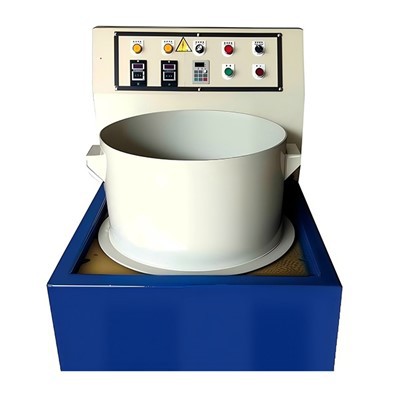
Yo, what’s up! As a supplier of Grinding Polishing Machines, I often get asked about what kind of abrasive materials are used in these machines. Well, let’s dive right in and explore the different types. Grinding Polishing Machine
1. Aluminum Oxide Abrasives
Aluminum oxide is like the go – to abrasive for a whole bunch of grinding and polishing jobs. It’s super versatile, and that’s why it’s so popular.
The thing about aluminum oxide is it’s tough as nails. It can handle high – pressure grinding without breaking down too quickly. I’ve seen it used on all sorts of metal surfaces, from mild steel to stainless steel. When you’re grinding away at a thick piece of steel, aluminum oxide does an excellent job of removing the material at a steady pace.
For polishing, it can give you a smooth finish. You can find aluminum oxide abrasives in different grits. The coarse grits are great for heavy material removal, like when you’re getting rid of big weld beads. And the finer grits are used for that final polish, making the surface look shiny and smooth.
One of the reasons I recommend aluminum oxide to my customers is its cost – effectiveness. It’s not the most expensive abrasive out there, so it’s great for those who are on a budget but still need good performance. Whether you’re a small – scale workshop or a big manufacturing plant, aluminum oxide abrasives can fit the bill.
2. Silicon Carbide Abrasives
Next up, we have silicon carbide. This abrasive is a bit different from aluminum oxide. It’s really hard, even harder than aluminum oxide in some ways.
Silicon carbide is perfect for grinding and polishing non – ferrous metals like aluminum and brass. These softer metals can be a pain to work with, but silicon carbide can cut through them like a hot knife through butter. It also works great on ceramics and glass. I remember a customer who was working on a custom glass sculpture. He used a Grinding Polishing Machine with silicon carbide abrasives, and the results were amazing. The glass was smooth, and there were no scratches.
The way silicon carbide works is by having sharp, angular grains. These grains are really good at cutting through materials, but they can also be a bit more brittle compared to aluminum oxide. So, you have to be a bit more careful when using them.
Another cool thing about silicon carbide is that it can dissipate heat quickly. This is important when you’re doing a lot of grinding and polishing because too much heat can damage the workpiece. So, if you’re working on heat – sensitive materials, silicon carbide is a great choice.
3. Diamond Abrasives
Diamond is the king of abrasives. It’s the hardest material out there, and it has some incredible properties when it comes to grinding and polishing.
Diamond abrasives are used in some of the most demanding applications. If you’re working on things like high – performance ceramics, carbides, or even natural diamonds (yes, you can use diamond to polish diamond!), diamond abrasives are the way to go.
The cutting power of diamond is just insane. It can remove material at a very high rate, even on the toughest surfaces. But it’s not just about speed. Diamond abrasives can also give you an extremely fine finish. You can use them to achieve that mirror – like shine on materials that are otherwise very difficult to polish.
However, diamond abrasives come at a cost. They’re more expensive than aluminum oxide and silicon carbide. But if you’re in an industry where precision and high – quality finishes are a must, the investment is worth it. For example, in the aerospace industry, where parts need to be incredibly precise and smooth, diamond – based grinding and polishing are often used.
4. Cubic Boron Nitride (CBN) Abrasives
CBN is a relatively new player in the abrasive game, but it’s quickly making a name for itself. It’s almost as hard as diamond and has some unique advantages.
CBN is mainly used for grinding and polishing hardened steels. When you have a steel part that’s been heat – treated to a very high hardness, regular abrasives might not work as well. But CBN can cut through these hardened steels like a champ.
One of the big advantages of CBN is its thermal stability. It can withstand high temperatures without losing its cutting ability. This means you can grind at higher speeds without worrying about the abrasive breaking down.
In terms of finish, CBN can give you excellent results. It can produce a very smooth surface on hardened steel parts, which is crucial in applications like automotive engine manufacturing, where precision and smoothness are key for the performance of the engine.
5. Emery Abrasives
Emery is an old – school abrasive. It’s kind of a mix of different minerals, mainly corundum and magnetite.
Emery has been used for a long time in grinding and polishing. It’s not as hard as some of the other abrasives we’ve talked about, but it still has its uses. It’s often used for less demanding applications, like rough grinding of wood or stone.
The good thing about emery is that it’s relatively inexpensive. If you’re just doing some basic grinding jobs around the workshop and don’t need the super – high performance of other abrasives, emery can be a good option. It can also be used for some light polishing tasks, like giving a bit of shine to a wooden surface.
Choosing the Right Abrasive
So, how do you choose the right abrasive for your Grinding Polishing Machine? Well, it depends on a few things.
First, think about the material you’re working on. If it’s a soft metal like aluminum, silicon carbide might be your best bet. For hardened steel, CBN or diamond could be the way to go. And if you’re just doing some general – purpose work on wood or mild steel, aluminum oxide or emery would work fine.
Next, consider the finish you want to achieve. If you’re looking for a super – smooth, mirror – like finish, diamond or silicon carbide in fine grits would be ideal. For a more basic finish, coarser grits of aluminum oxide or emery might be enough.
Also, think about your budget. Some abrasives are more expensive than others. If you’re on a tight budget, you might want to start with something like aluminum oxide or emery and then upgrade if you need better performance.
As a supplier of Grinding Polishing Machines, I’ve seen firsthand how important it is to choose the right abrasive. The wrong choice can lead to poor results, wasted time, and even damage to the workpiece. So, take the time to think about your needs and make an informed decision.
If you’re in the market for a Grinding Polishing Machine or need advice on which abrasives to use, don’t hesitate to get in touch. We can help you find the perfect solution for your grinding and polishing needs. Whether you’re a professional in a large – scale factory or a hobbyist in your garage, we’ve got the expertise and products to support you. Reach out to start a conversation about your requirements, and let’s see how we can work together to get the job done right.
Abrasive Compounds References
- "Abrasive Technology Handbook", McGraw – Hill
- "Handbook of Machining with Grinding Wheels", Springer
Dongguan Xindingsheng Intelligent Grinding Technology Co., Ltd.
Dongguan Xindingsheng Intelligent Grinding Technology Co., Ltd. is one of the most reliable grinding polishing machine manufacturers and suppliers in China, also supports customized service. Please feel free to wholesale bulk high quality grinding polishing machine in stock here from our factory. Contact us for pricelist.
Address: Room 101, Building 1, No. 73 Dahuangmei Road, Dalingshan Town, Dongguan City, Guangdong Province, China
E-mail: cndskj@126.com
WebSite: https://www.xdsfinishing.com/
