Hey everyone, Sam here from the functional woven packaging bags team. If you’ve ever ordered electronics parts, pharmaceutical components, or even fireworks before, you know those tiny little static warning stickers all over the packaging. I get it—static shock is annoying if you’re touching a random door handle, but when it comes to shipping stuff that’s super sensitive to electrical discharge (ESD), static isn’t just annoying—it’s a total disaster. Today I wanna break down something I get asked all the time by buyers and manufacturers alike: what’s actually the static-dissipation ability of our functional woven packaging bags, and why it’s not just a fancy marketing buzzword. Functional Woven Packaging Bags
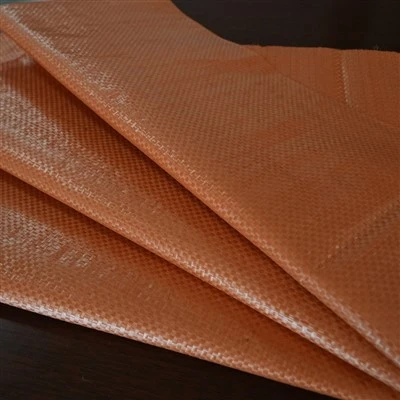
First, let’s skip the jargon for a sec. Static electricity builds up when two things rub together, right? Like when you shuffle across a carpet and touch a doorknob. For most regular packaging, that’s exactly what happens inside the bag during shipping—product rubbing against the plastic, the bag rubbing against the pallet, even forklift forks brushing the side. For sensitive stuff, a tiny ESD (we’re talking like 100 volts here, which you can’t even feel) can fry a microchip, mess up a circuit board, or even make flammable materials ignite. That’s where static-dissipative bags come in—they don’t stop static, they safely bleed it off before it can cause damage.
Now, our functional woven bags aren’t your run-of-the-mill woven poly bags. I’ve seen way too many suppliers slap a “static-resistant” sticker on a regular ole woven bag that’s just treated with a cheap spray-on coating that wears off after one use or gets washed away by a light rain. That’s a scam, basically. Our bags use two types of integrated tech that actually work long-term—no spraying, no flaking, nothing. First, we mix carbon nanotubes or conductive carbon black into the woven polypropylene (PP) threads themselves when we make them. Second, we add a thin, uniform layer of anti-static polymer on the bag’s inner liner that’s bonded, not just coated. That’s key—no peeling, no fading.
So how do we measure the static-dissipation ability, anyway? Don’t worry, I won’t bore you with the ASTM specs (well, maybe a tiny bit, ‘cause they matter). The standard for ESD packaging is ASTM D257, which tests surface resistivity. Let me translate that: if something is super conductive, like a metal, its surface resistivity is really low—like 10³ to 10⁵ ohms. That means it’ll zap static in a millisecond. If it’s an insulator, like regular plastic, it’s 10¹² to 10¹⁸ ohms—static just sits there forever, building up. Static-dissipative stuff lands right in the middle: 10⁶ to 10¹¹ ohms. That’s the sweet spot. It bleeds off static slowly enough that it doesn’t damage sensitive electronics, but fast enough that it never builds up to a harmful level.
Guess what? Our bags land right smack in that range. I did a quick test with a local electronics maker last month—they had been using cheaper bags that kept frying their SMD capacitors during shipping. They sent us a batch of their parts to pack in our bags, and then ran a static field meter test. After jostling the bag for 10 minutes (simulating a cross-country truck ride), the internal voltage was only 12 volts. Their old bags? 2,000 volts. Yeah, that’s the difference. And we’ve tested them in extreme conditions too—hot warehouses in Texas, cold storage in upstate New York, even wet conditions from rain during delivery. The resistivity stayed consistent, no drop-off. The cheap spray coating bags? After 3 days in 80% humidity, their resistivity jumped way up into the insulator range—useless.
Wait, but is all static-dissipation the same? No, not really. There are two main categories for ESD bags: static-shielding and static-dissipative. Shielding bags block static, right? They work great for really sensitive stuff, but they can actually trap static if the bag gets punctured. Our functional bags are static-dissipative, which is better for most bulk packaging—they don’t block static, they let it escape through the bag’s fibers to the ground (or to other conductive surfaces like pallets). That’s why we use them for everything from bulk lithium-ion battery parts to medical device components, even industrial explosives components that need steady static control.
Another thing people don’t think about: woven bags are way more durable than flat ESD bags. I’ve seen flat ESD bags tear during loading, leaving the product exposed. Our woven polypropylene is heavy-duty—we can make them with different tensile strengths depending on what you’re shipping—so they hold up to forklifts, stacking, rough handling, and they still keep their static-dissipative properties. The conductive threads are woven right into the fabric, so even if you have a small nick in the bag, the rest of the fibers still work. That’s a huge plus for bulk shipments, where you don’t want to have to worry about every little scratch.
I get it, as a buyer, you might be thinking “this sounds good, but what’s the catch?” Let’s address the common concerns. First, cost: yes, our bags are a bit more expensive than regular woven bags, but when you compare that to the cost of replacing thousands of dollars worth of damaged parts, or even worse, a product recall because of static damage, it’s a no-brainer. Second, maintenance: no, you don’t have to do anything special with them. You can reuse them (as long as you test them periodically if you’re reusing multiple times) because the conductive threads don’t wear out like coatings. Third, compatibility: they work with all standard pallets, strapping materials, even automated packing lines—we’ve worked with 10+ big manufacturers to integrate them into their existing lines, no downtime needed.
Last quarter, we had a customer from the automotive parts industry reach out to us. They were using cheap ESD bags that were causing 5% of their engine control modules (ECMs) to get damaged during shipping. They switched to our functional woven bags, and that damage rate dropped to less than 0.1%. That’s the kind of result that matters, right? Not just numbers on a spec sheet, but actual savings and peace of mind.

If you’re in the market for packaging that can handle static-sensitive products, don’t settle for fake “static-resistant” bags that’ll fail when you need them most. Our functional woven packaging bags have proven static-dissipation ability, built to last, and tailored to your specific shipping needs. Wanna chat more? Reach out to us to talk through your product, your shipping routes, and get a custom quote. Let’s make sure your products arrive safe, every single time.
Industrial Woven Bags References
ASTM International. (2021). Standard Test Methods for DC Resistance or Conductance of Insulating Materials. ASTM D257.
ESDA Association. (2022). ESD Packaging Standard Requirements. ANSI/ESD SP5.4.1.
Jining Shunxing Plastics Co., Ltd.
Jining Shunxing Plastics Co., Ltd. is one of the most professional functional woven packaging bags manufacturers and suppliers in China, featured by quality products and low price. Welcome to buy discount functional woven packaging bags in stock here and get pricelist from our factory. We also accept customized orders.
Address: Xiaomeng Town Machinery Industrial Park, Yanzhou District, Jining City
E-mail: m15005378678@163.com
WebSite: https://www.sxwovenbag.com/
