Hey there, if you’ve ever messed around with audio gear, charging cables, or even old-school professional stage setups, you’ve probably taken a plug pin for granted—until one wiggles loose in the middle of a gig or cuts out mid-important presentation. As someone who’s been in the Au Standard Plug Pin game for over a decade, I see way too many people cheap out on these tiny, often-overlooked parts, and it shows. Today, I’m breaking down exactly what makes a solid Au Standard plug pin tick—not the hype, just the actual, non-negotiable design features that keep connections steady, reliable, and long-lasting. No corporate jargon, just real talk from someone who’s shipped thousands of these things and fixed way too many problems that boil down to a bad pin. Au Standard Plug Pin
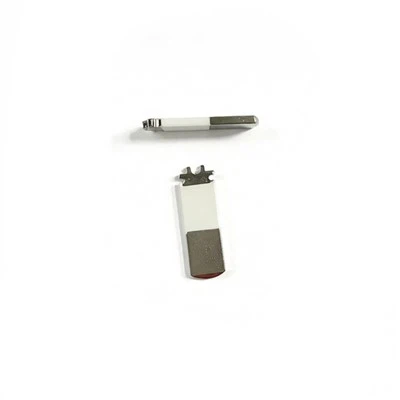
First off, let’s get one thing straight: “Au Standard” isn’t just marketing for gold-plated pins. A lot of guys message me asking for “pure gold pins” and have no clue that pure gold is soft as butter. You can’t use pure metal for a plug pin that’s getting inserted and pulled hundreds, even thousands of times. The alloy core is the backbone of every good Au Standard pin, and that’s where most cheap competitors cut corners. We use a tin-bronze or copper-nickel alloy for the core, no exceptions here. Why those? Tin-bronze is tough—like, it can handle all the friction from plugging and unplugging without bending or deforming. Copper-nickel adds just enough stiffness to keep the pin’s shape consistent in tight, cramped spaces, like the back of a studio mixer or a tiny phone charging port. I’ve had a client who was a live sound engineer tell me he uses our pins on his stage XLRs because the old aluminum cores he was getting would bend when he dropped his cable bag mid-set. That’s the kind of thing we’re preventing here.
Next, the gold plating isn’t a “luxury add-on”—it’s a critical design feature, and not just a thick layer of gold slapped on top. Let’s talk plating thickness, because this is where so many suppliers lie. For an Au Standard pin, you want at least 0.5 microns of gold for the contact surface that actually touches the female pin it mates with. Wait, 0.5 microns—sounds tiny, right? But think about it: every time you insert a plug, you’re scraping a tiny bit of material off both pins. If you only have 0.2 microns of gold, after 50 or 100 insertions, you’re down to the alloy core, which will corrode fast—especially if you’re working in a humid venue or by a beach. We also add a layer of nickel under the gold, by the way. That nickel acts as a barrier so the copper from the core doesn’t leach up into the gold layer, which would cause discoloration and bad conductivity over time. I once had a customer return a batch of competitor pins that looked all brown and tarnished after 6 months—turns out they skipped the nickel layer, and the copper had seeped through the gold. No one wants a brown audio connection, trust me.
Now, the mating interface—this is the part that makes or breaks a plug pin’s reliability. I see so many pins that are either too tight (they won’t fit in the port) or too loose (they fall out or cut out mid-use). The design here has to be precise, no exceptions. We use a “split crown” design for most of our standard pins—think of a little metal sleeve with two narrow cuts along the length, so it can squeeze slightly when you insert it, then snap back to grip the female pin firmly. The crown’s outer diameter is calibrated to within 0.002mm—like, that’s super tight tolerances. Why? If it’s even a hair too big, it’ll stick and wear out both pins fast; too small, and you’ll get intermittent connections. A lot of cheap suppliers use plastic molding for the crown shape, which warps over time. We machine our metal crowns from solid alloy, so every single pin is the same size, batch after batch. A guy who runs a rental company told me that switching to our pins cut his replacement rate for XLRs by 40%—that’s all because the split crown holds consistent tension, not too much, not too little.
Wait, also, the taper at the tip. This is a tiny detail that most people don’t notice, but it’s a game-changer for how easy the pin is to insert. We use a gradual 15-degree taper on the tip, not a sharp, abrupt cut like you see on cheap pins. Why? A sharp tip can catch on the female port’s edges, scratching them and wearing them out faster. It can also cause you to misalign the pin, which leads to bent pins. That’s a huge headache for anyone using delicate gear, like professional microphones or industrial sensors. Our gradual taper lets you slide the pin into the port smoothly, even if you’re in a hurry—like when you’re setting up for a show and trying to get 10 cables plugged in before the band starts. I’ve had so many technicians tell me they hate cheap pins because they jam; ours go in easy every time.
Then there’s the terminal end, where the wire crimps or solders to the pin. This is another area where corners get cut all the time, and it’s where most connection failures happen. The terminal shouldn’t just be a little hole to stuff a wire into—there needs to be a solid, strain-relieved connection. We design our terminals with a crimping flange that wraps around the wire’s outer insulation, not just the inner conductor. A lot of suppliers only crimp the wire, which works for a little while, but if you pull the cable hard (like if someone steps on it or yanks it off a shelf), the wire will pull out of the pin. Our flange adds that extra layer of hold, so the connection stays even after years of rough use. We also leave a tiny gap between the terminal and the main pin body—enough room to add heat shrink tubing when soldering, which prevents frayed wire strands from touching other pins and causing short circuits. That’s a safety feature too, especially for high-voltage applications.
Oh, and corrosion resistance—let’s not sleep on that. A good Au Standard pin has to stand up to moisture, dust, even the occasional splash of soda (I’ve seen it all at trade shows). The gold layer is inherently corrosion-resistant, but we also pass every pin through a post-plating sealing treatment that seals any tiny pores in the gold. Pure gold is malleable, so sometimes plating leaves microscopic gaps where moisture can get in and reach the nickel layer. That sealing treatment blocks that, so even if a pin sits in a damp storage closet for a year, it’ll still work when you pull it out. I had a customer who restores vintage audio gear tell me our pins are the only ones that don’t tarnish on his old Neumann microphones—something he’s struggled with for decades. That’s the kind of longevity we’re after.
Wait, let’s talk about something that’s not just design, but performance: conductivity. Gold is a great conductor, but the alloy core we use is even better than pure copper when it comes to carrying steady current. The key here is that the contact surface is entirely gold, so you get the corrosion resistance of gold plus the low resistance of the alloy core. No hot spots, no voltage drops, which is super important for things like power connectors, audio cables, and industrial sensors. A lot of cheap pins have gold only on the very top of the contact, so once it wears through, the connection gets spotty and causes signal loss. Our design coats the entire contact crown in gold, so even as the pin wears down over thousands of insertions, the gold is still there.
Also, environmental design—wait, that’s a thing now, right? A lot of people don’t think about this, but good design shouldn’t be toxic. We don’t use any lead or cadmium in our pins, which means they’re RoHS compliant, so they’re safe for use in consumer, industrial, and medical gear. A lot of overseas suppliers still cut corners here, using cheap alloys with heavy metals that can leach over time, which is a big no-no for medical devices or outdoor equipment. That’s part of the Au Standard too—standard doesn’t mean just material composition, it means meeting real-world requirements for safety and sustainability.

Let me wrap this up a bit, because I could go on about this stuff all day. The bottom line is, an Au Standard plug pin isn’t just a pin with gold on it. It’s a precisely machined alloy core that balances strength and conductivity, a gold plating system that’s thick enough to last and has a nickel barrier under it, a split crown mating interface with calibrated tension to keep connections steady, a gradual taper tip for easy insertion, a robust terminal that secures wires properly, and corrosion-resistant sealing that stands up to the real world. All these small, intentional design features add up to a part that doesn’t fail when you need it most—whether you’re sound-checking a festival, setting up a lab test, or just charging your phone late at night.
Electrical Brass Switch Socket Part I’ve been in this game long enough to know that when someone needs a reliable plug pin, they don’t have time for gimmicks or cheap parts that break. Every batch of our Au Standard pins goes through a quick tension test and a visual check before it ships, because we’ve seen what happens when you skip that. If you’re working on a project where connection reliability isn’t optional—audio gear, industrial equipment, consumer electronics, whatever—hit me up to talk through your needs. We can customize pins for specific applications too, if you have unique size or performance requirements. No sales pitch, just straight talk about parts that work. I’m here to help you figure out what pin is right for your job.
References
- SAE International. (2018). “Surface Finish Requirements for Electrical Connectors.” Aerospace Materials Specification (AMS) 2404.
- International Electrotechnical Commission. (2020). “Connectors for Electronic Equipment—General Specification.” IEC 60512-1.
- ASTM International. (2021). “Standard Test Methods for Measuring Thickness of Metallic Coatings.” ASTM B456-21.
- Audio Engineering Society. (2019). “Reliability of XLR Connectors for Live Sound Applications.” AES 58-2019.
Dongguan Fangrun Metal Products Co., Ltd.
We’re well-known as one of the leading au standard plug pin manufacturers in China, specialized in providing high quality customized products. Please feel free to buy discount au standard plug pin made in China here from our factory. For quotation and free sample, contact us now.
Address: New Town Industrial Zone,Xiegang Village,Xie Gang Town,Dongguan City
E-mail: 825556703@qq.com
WebSite: https://www.fangrunpin.com/
