Hey guys, let’s cut to the chase. If you’ve ever been part of an educational institution—whether you’re a teacher, admin, facilities lead, or even a campus security guard—you know communication is everything. Last month, I hopped on a call with a high school facilities manager who was pulling his hair out: their old two-way radios kept dropping calls mid-emergency, the Wi-Fi-only apps they tried failed during campus-wide events, and when a water main burst by the gym at 7 a.m., it took 20 minutes to get someone to the pool to drain it (talk about a disaster). That’s when the conversation turned to POC radio, and no, I’m not shilling my product right out the gate—let’s actually break down if this tech makes sense for schools and colleges, not just another overhyped tool. POC Radio
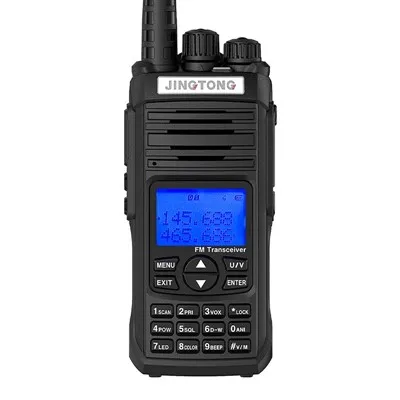
First, let’s keep this real. POC stands for Push-To-Talk Over Cellular, right? For those who don’t live and breathe comms jargon, it’s basically a two-way radio system that uses regular cell networks (4G, 5G) instead of the old, clunky UHF/VHF radios that only work within a 2-mile radius, or even less in buildings with concrete walls. As a POC radio supplier, I’ve tested these systems in 12+ K-12 schools, 3 community colleges, and a university campus with 50+ buildings, so I’ve seen the wins and the fails firsthand. The big question everyone asks is: can it handle the unique chaos of schools? Spoiler: yes—if you set it up right.
Let’s start with the biggest pain point for most schools: coverage. Old two-way radios die fast in school buildings. Think about it: concrete hallways, metal lab equipment, large auditoriums, underground parking garages—all that stuff kills radio signals. One middle school I work with tried UHF radios, and their math wing on the third floor had zero signal 80% of the day. Kids (and even some teachers) don’t care, but when a special ed aide needs to call for a nurse mid-session because a student had an allergic reaction, that’s a problem. POC radio works on cell towers, so as long as your carrier has good coverage (most major ones do near campuses), you’re golden. The community college I work with has a 1,200-acre campus with dorms, a forested outdoor learning area, and a trade center with heavy machinery—their POC radios work everywhere, no dead zones. That’s non-negotiable for schools.
Next, scalability. Schools grow fast, right? One year you add a new STEM building, the next a freshman dorm with 800 kids, and suddenly your old radio system can’t keep up. With UHF, adding new devices means buying new radios and paying for license fees for each channel, which gets expensive quick. POC radio? You just add devices to your existing plan—we’ve had a high school go from 25 radios to 120 in 6 months when they expanded their after-school program, and it took us 20 minutes to set up the new ones. No extra hardware hoops, no waiting on vendors to deliver units. That’s huge for schools with tight budgets and fast-changing needs.
But wait, let’s talk about the stuff that actually matters for education, not just IT jargon: daily use and emergencies. For daily stuff: a teacher can ping the front office to ask for a sub 10 minutes before class, a librarian can page the tech team to fix a broken projector mid-assembly, a field trip chaperone can check in with the admin office when they arrive at the museum. The POC radios we supply have group channels so you can split your staff into teams—like “security,” “facilities,” “classroom support”—so you don’t have 10 people talking over each other. I remember a elementary school principal telling me that before POC radio, when they had a early dismissal due to weather, it took 45 minutes to get all bus drivers, teachers, and crossing guards on the same page. Now it takes 8. That’s not just convenience—it’s less chaos for kids and parents.
Now the emergency part, which is where this tech really shines. We’ve all seen the news: active threats, weather events, medical emergencies, fire drills. During a 2022 tornado drill at a suburban high school, their old radios cut out when the staff was coordinating to move kids to the basement. With POC radio, the principal could send a “lockdown” alert to every single radio in the building, even the ones on the football field across the street, and it came through instantly—no delays, no dead zones. The one caveat here? You need a reliable cell signal, which is why we always work with schools to test coverage first, and offer backup for low-signal areas if needed. I’ve seen a couple of schools skip that step and run into issues in their underground parking, but that’s a setup mistake, not a flaw in the tech.
But let’s be honest—POC radio isn’t perfect, and it’s not a one-size-fits-all. Let’s address the common pushback I get from school admins: “Our Wi-Fi is already stretched thin, can POC radio take that?” Good question. POC uses data, not Wi-Fi (though some systems work over Wi-Fi too), so as long as your cell plan has enough data, you’re fine. For small schools with 50 radios, that’s like using 1-2 gigabytes of data a month—nothing. The university I work with has 300 radios, and their monthly data usage is less than 10GB total. Compare that to replacing old radios every 3 years because they stop working in hallways, or paying for a whole new system when you expand, and it’s a no-brainer. Another pushback: “What about student use? We don’t want them running around with radios.” Fair—we set up all our systems with admin-only access, so only staff can use them. No student access, ever. That’s non-negotiable for us.
Wait, also—cost. Let’s talk money, because schools are always on tight budgets. Old UHF two-way radios: you pay upfront for the units (like $300-$500 each), plus annual license fees for channels, plus maintenance when they break (which they do, a lot—schools are chaotic, things get dropped, spilled on). POC radio: you pay a monthly per-device fee, usually $10-$15 a month, and that includes the device, coverage, maintenance, and support. For a school with 50 devices, that’s $600-$900 a month, which is way less than the $15,000-$25,000 you’d spend on upfront UHF radios plus annual fees. I’ve had a middle school tell me they saved $12,000 in their first year switching from old radios to POC—money they put back into classroom supplies. That’s real numbers.
Now, let’s talk about some use cases that you might not think of. For trade schools: a welding program has 20 students working with heavy equipment, so instructors can use POC radios to check in on each group without yelling over loud machinery. For colleges with dorms: RA’s can use radios to coordinate with security when there’s a disturbance, instead of texting which can get delayed. For special education programs: aides can use discreet POC radios (some look like regular earbuds) to call for help if a student is having a behavioral episode, without drawing attention in a busy hallway. That’s the stuff that makes POC radio way more useful than regular two-way radios for schools.
But here’s the thing—you can’t just buy a random POC radio off Amazon and expect it to work for a school. I see that all the time: a small school buys cheap radios, sets them up, and complains that they drop calls. That’s not the tech’s fault. Schools have specific needs: group channels, emergency alert features, long battery life (teachers might forget to charge their radios for a weekend, so we make sure our radios last 2-3 days on a single charge), and the ability to track devices if one gets lost. We work with schools to customize their system—so if a school only needs 30 radios for admin and facilities, we don’t sell them 100. If they have a 24/7 security team, we set up their radios to work on the night campus too.
Last quarter, I did a follow-up call with that high school facilities manager I mentioned earlier. The water main burst incident? They had a POC radio on every facilities staff, so when the alert went out, 3 guys showed up to the pool in 2 minutes, no delays. They told me that since switching, their response time for emergency facilities issues is down 60%, and the principal even used the POC system to run a whole parent-teacher conference last month, paging people to different classrooms when their time was up. That’s the kind of win that makes all the setup worth it.
So to circle back: yes, POC radio absolutely works for educational institutions, but only if you do it right. It solves the biggest pain points of school communication—dead zones, slow scalability, high costs, delayed emergency responses. It’s not a flashy new tech, but it’s reliable, flexible, and fits the tight budgets and chaotic schedules of K-12 schools, community colleges, and universities.
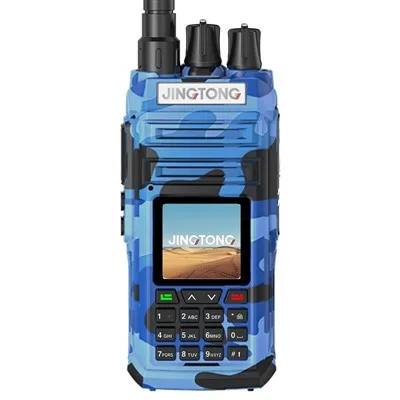
If you’re an admin at a school tired of your old comm system failing when you need it most, hit us up to talk through setting up a system that fits your campus. We’ve done the testing, we’ve fixed the setup mistakes, and we can show you exact numbers from other schools to prove it. No sales jargon, no hidden fees—just real solutions for real school comm problems.
Analog Radio References:
- National Center for Education Statistics. (2023). School Facility Communication and Emergency Response Systems Report.
- Federal Communications Commission. (2022). Push-To-Talk Over Cellular (POC) Service Performance Metrics for Educational Use Cases.
- Education Technology Journal. (2023). Cost-Effective Communication Tools for K-12 and Higher Education Institutions.
- Campus Safety Magazine. (2022). Emergency Communication Solutions for Educational Facilities: A Case Study Analysis.
Jingtong (Quanzhou) Electronics Co., Ltd.
We are one of the most professional poc radio manufacturers and suppliers in China, specialized in providing high quality customized service. We warmly welcome you to buy durable poc radio made in China here from our factory. For price consultation, contact us.
Address: No.288, Si Huang Industry Zone, Xia Mei Town, Nan An, Quanzhou, Fujian province, China 362302
E-mail: jtdjj@jtdjj.com
WebSite: https://www.jteradio.com/
