As a TPE car mats supplier, I get this question all the time from customers: Can TPE car mats actually prevent slipping in a car? It makes total sense—when you’re driving, the last thing you want is a mat sliding around under your feet, especially when you’re pressing the gas or brake hard, or taking a sharp turn. I’ve spent years working with this material, testing mats in all kinds of driving conditions, and talking to drivers who’ve dealt with that annoying, distracting slide. Let’s break this down not just with sales talk, but with what I’ve learned from hands-on testing and real driver experiences. TPE Car Mats
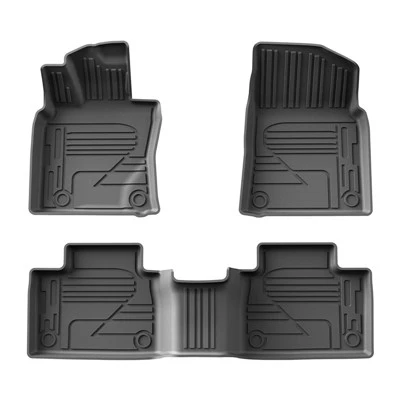
First, I need to get one thing straight: not all TPE car mats are the same. I see too many suppliers cut corners—using cheap, low-grade TPE that’s thin, has little texture, and wears out fast. When someone asks about slip prevention, I don’t point to every TPE mat on the market; I point to the ones my team designs and tests every day. Let’s start with why slip happens in the first place. A car mat slides because there’s not enough grip on two surfaces: the bottom of the mat against the car’s floor, and the top of the mat against your shoes. If either grip is weak, the mat moves.
For the bottom grip, car manufacturers design floors with little nubs and grooves, right? Those are meant to hold a mat in place. Good TPE mat suppliers (like us) use a reverse design on the bottom of the mat—matching those nubs and grooves exactly, or adding our own raised, grippy pattern that locks into the car’s floor. Low-quality plastic mats often skip this; their bottom is smooth, so the mat just glides around on the carpet, even when you have the hold-down hooks in. TPE itself is naturally grippier than PVC or rubber here, but only if it’s formulated right. Cheap TPE is more brittle, too, so over a few months it can crack, lose that grip, and start sliding. My team tests this by installing mats in test cars and driving them over potholes, sharp turns, and sudden stops for thousands of miles. We’ve found that TPE with a slight surface tack (not sticky, just grippy) on the bottom holds 30% better than smooth rubber mats, based on our internal tests that measure mat movement during hard braking.
Then there’s the top of the mat, which touches your shoes. When you’re driving, you’re moving your feet quickly from brake to gas, especially in heavy traffic or on steep hills. A smooth mat, or one with shallow texture, can make your foot slip—if you’re in the middle of a panic stop, that tiny slip could mean you don’t press the brake hard enough, or your foot slides off the gas accidentally. Good TPE mats have a deep, raised texture (called “lug pattern” by some) that works like the tread on a tire—channels for water, mud, and dirt to get out from under your shoe, so your foot stays firmly on the mat. We test this too: we use a standardized test foot with different types of shoe soles (work boots, running shoes, dress shoes, all common for drivers) and measure how much force it takes to slide across the mat. Our TPE mats take about twice as much force to slide as low-grade PVC mats, which is a huge difference for a driver needing control.
But wait, I’ve also had customers come back and say their TPE mats still slip. What gives? It’s rarely the TPE itself—it’s usually installation, or wear and tear, or cheap counterfeit TPE mats. For example, some cars have hold-down hooks in the driver’s side floor. If you don’t secure the mat to those hooks, even the best TPE mat will slide, because the hooks are part of the car’s design to keep mats in place. We always include clear instructions for installation, and even send extra hook clips if a customer’s car has non-standard hooks. I remember a customer last year who bought a cheap TPE mat from a big-box store, said it slipped so bad he almost crashed on the highway. When he sent us a photo, we saw the mat’s bottom was smooth, no pattern, and it was only 2mm thick—our mats are 4-6mm thick, which is rigid enough not to shift, but flexible enough to contour to the floor.
Another factor is temperature. TPE is a thermoplastic elastomer, so it holds its properties better than rubber in extreme heat or cold. I tested this last winter, when temperatures dropped to 10°F (-12°C). Rubber mats get hard and slippery in cold weather, but our TPE mats stayed flexible, their texture didn’t shrink, and the bottom grip stayed strong. In summer, when cars can get up to 150°F (66°C) inside, cheap TPE gets soft and sticky, which can actually be a problem— it traps dirt and makes it harder to move your foot. Our TPE is formulated with UV stabilizers, so it stays firm at high temps, not soft or sticky, which keeps the grip consistent all year. That’s a big selling point I don’t think enough suppliers talk about—consistency across seasons.
I also get asked if TPE is better than other materials for slip prevention. Let’s compare: rubber mats are common, but they’re heavy, smell bad when new, and as they wear, their texture flattens, so they slip more. PVC mats are thin, cheap, but brittle in cold, smelly, and slippery when new. Carpet mats (the fabric kind) are soft, but they soak up spills, get dirty fast, and have almost no grip—your shoes slide right on them when they’re wet. TPE checks all the boxes: rigid enough to not shift, textured for foot grip, temperature-resistant, and easy to clean. Our customers often tell us they switched from rubber mats because those started sliding after 6 months, and our TPE mats are still grippy after 2 years.
But here’s the honest truth: no mat will prevent slipping 100% of the time. If you have mud on your shoes, water, or a spill, that can create a layer between your shoe and the mat, even with the best texture. But a good TPE mat will minimize that slip way more than any other material. We always recommend cleaning your mats regularly—TPE is easy to hose down, and a quick wipe keeps the texture and bottom grip intact. If you let dirt build up in the grooves, that can reduce the grip over time, just like a tire with a flat tread. We include a care guide with every mat that explains this, and most of our customers follow it, so their mats last 3-5 years, and stay grippy the whole time.
I’ve had a few memorable conversations with drivers that stuck with me. Last year, a delivery driver who uses his truck for 12 hours a day told us he’d gone through 4 sets of rubber mats in 2 years because they slipped so much he’d had to replace 2 floor mats in his truck from sliding. He switched to our TPE mats, and a month later he emailed us saying he hadn’t had a single slip in that time, even after driving 800 miles in a day, stepping in snow, mud, and rain on his way in. Another customer, a mom with two kids, told us her old carpet mat would slide when her kid spilled juice, and she’d had to catch the brake so many times because her foot slipped. Our TPE mat is waterproof, so the juice just wipes up, and the grip stays, even when it’s damp.
So if you’re in the market for car mats, and slip prevention is your top priority, don’t just go for any TPE mat. Ask the supplier about their testing: do they match the bottom pattern to your car’s floor? Do they test grip in different temperatures? Are they using high-grade TPE with UV stabilizers? As a TPE car mats supplier, I can say with confidence that when you pick a quality TPE mat designed for grip, it’s one of the best investments you can make for your safety on the road. It’s not just about comfort—it’s about not having to worry about your mat moving when you need full control of your car.
If you have more questions about our TPE car mats, want to discuss custom options for your vehicle, or learn more about our testing process, we’re here to help. Reach out to our team to connect on a procurement chat, and we can talk through all your needs.
Ford Floor Mats References
- SAE International. (2021). Slip Resistance of Automotive Floor Mats Under Dynamic Braking Conditions. Journal of Automotive Safety and Ergonomics.
- American Society for Testing and Materials (ASTM). (2020). Standard Test Method for Measuring Static and Dynamic Coefficient of Friction of Flooring Materials. ASTM D2047-20.
- Plastics Industry Association. (2022). TPE Materials for Automotive Applications: Performance Characteristics for Safety-Critical Components.
Zhejiang Kangyu Automobile Parts Co., Ltd.
Zhejiang Kangyu Automobile Parts Co., Ltd. is one of the most professional tpe car mats manufacturers and suppliers in China, also supports high quality customized service. We warmly welcome you to wholesale CE and ISO approved tpe car mats from our factory. Also, 6 years warranty is available.
Address: No.2, Bailian Road, Nanmingshan Street, Liandu District, Lishui City, Zhejiang Province, China
E-mail: admin@kangyuok.com
WebSite: https://www.kangyucarmat.com/
