Can titanium anodes be used in high – temperature environments?
As a supplier of titanium anodes, I’ve encountered numerous inquiries regarding the performance of our products in high – temperature settings. This question is of great significance, as many industrial applications involve elevated temperatures, and choosing the right anode material is crucial for the success and efficiency of these processes. Titanium Anodes

The Basics of Titanium Anodes
Before delving into the high – temperature performance, it’s essential to understand the fundamental properties of titanium anodes. Titanium is a highly corrosion – resistant metal, which makes it an ideal choice for anode applications. When used as an anode, titanium is often coated with a precious metal oxide, such as iridium oxide or ruthenium oxide. These coatings enhance the anode’s electrocatalytic activity, allowing for efficient electron transfer during electrochemical reactions.
Titanium anodes are widely used in various industries, including electroplating, water treatment, cathodic protection, and electrolysis. In these applications, they play a vital role in facilitating the desired chemical reactions by providing a stable source of electrons.
High – Temperature Considerations
The ability of titanium anodes to withstand high temperatures depends on several factors, including the type of coating, the operating temperature range, and the duration of exposure.
Coating Stability
The precious metal oxide coatings on titanium anodes are designed to provide electrocatalytic activity, but they also need to maintain their integrity at high temperatures. Different coatings have different temperature limits. For example, iridium oxide – coated titanium anodes generally have better high – temperature stability compared to ruthenium oxide – coated ones. Iridium oxide can withstand higher temperatures without significant degradation, which is attributed to its more stable crystal structure and chemical properties.
At elevated temperatures, the coating may undergo thermal expansion and contraction. If the thermal stress exceeds the bonding strength between the coating and the titanium substrate, the coating may crack or delaminate. This can lead to a decrease in electrocatalytic activity and a shorter anode lifespan. Therefore, when selecting a titanium anode for high – temperature applications, it’s important to choose a coating that is specifically designed for such environments.
Operating Temperature Range
The normal operating temperature range for most standard titanium anodes is typically between 20°C and 60°C. Beyond this range, the performance of the anode may start to decline. However, with proper design and material selection, titanium anodes can be used in higher temperature environments.
Some specialized titanium anodes are designed to operate at temperatures up to 100°C or even higher. These anodes are often used in processes such as high – temperature electroplating or certain chemical synthesis reactions that require elevated temperatures. When operating at high temperatures, it’s important to note that the electrochemical reaction rates may increase, which can affect the overall process efficiency and the anode’s consumption rate.
Duration of Exposure
The duration of exposure to high temperatures also plays a significant role in the performance of titanium anodes. Short – term exposure to high temperatures may have a minimal impact on the anode, especially if the coating is well – designed. However, long – term exposure can cause continuous degradation of the coating and the titanium substrate.
For example, in a continuous industrial process that operates at high temperatures for extended periods, the anode should be carefully monitored and maintained. Regular inspections can help detect any signs of coating damage or substrate corrosion, allowing for timely replacement or repair of the anode.
Industrial Applications in High – Temperature Environments
Despite the challenges associated with high – temperature operation, titanium anodes are still used in several industrial applications where high temperatures are unavoidable.
High – Temperature Electroplating
In some electroplating processes, such as the deposition of certain metals with high melting points, high temperatures are required to achieve the desired coating quality and adhesion. Titanium anodes with appropriate coatings can be used in these processes. For example, in the electroplating of nickel or chromium at elevated temperatures, the anode needs to maintain its electrocatalytic activity and corrosion resistance. By using high – temperature – resistant coatings, titanium anodes can provide a stable source of metal ions during the electroplating process.
Chemical Synthesis
In chemical synthesis, many reactions are carried out at high temperatures to increase the reaction rate and yield. Titanium anodes can be used in electrochemical synthesis processes, such as the production of organic compounds or the oxidation of certain chemicals. The high corrosion resistance of titanium and the electrocatalytic activity of the coating make it possible to conduct these reactions efficiently even at elevated temperatures.
Mitigating Strategies for High – Temperature Use
To ensure the reliable performance of titanium anodes in high – temperature environments, several mitigating strategies can be employed.
Coating Optimization
As mentioned earlier, choosing the right coating is crucial. Advanced coating technologies can be used to improve the high – temperature stability of the anode. For example, alloying the precious metal oxide coatings with other elements can enhance their thermal resistance and mechanical properties. Additionally, the coating thickness and morphology can be optimized to reduce the risk of cracking and delamination at high temperatures.
Cooling Systems
In some cases, it may be necessary to implement cooling systems to maintain the anode temperature within an acceptable range. This can be achieved through the use of water – cooled jackets or other heat – exchange mechanisms. By controlling the temperature, the lifespan of the anode can be significantly extended, and the overall process efficiency can be improved.
Anode Design
Proper anode design can also contribute to better high – temperature performance. For example, increasing the surface area of the anode can help dissipate heat more effectively, reducing the temperature gradient across the anode. Additionally, using a more rigid substrate material or providing additional support structures can help prevent deformation and damage to the anode at high temperatures.
Conclusion
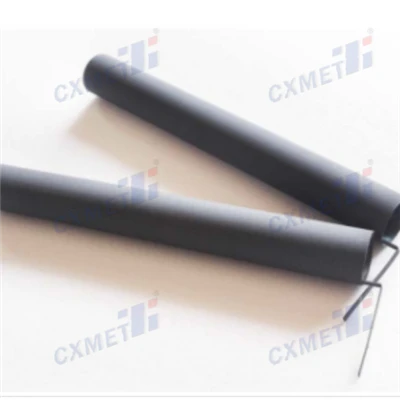
In conclusion, titanium anodes can be used in high – temperature environments, but it requires careful consideration of various factors such as coating stability, operating temperature range, and duration of exposure. With the right coating selection, proper anode design, and appropriate mitigation strategies, titanium anodes can provide reliable performance in high – temperature industrial applications.
3D Pure Titanium Powder If you’re looking for high – quality titanium anodes for your high – temperature processes, we are here to assist you. Our team of experts can provide you with in – depth technical advice and customized solutions to meet your specific needs. Contact us to start a purchase negotiation and discover how our titanium anodes can enhance the efficiency and reliability of your operations.
References
- "Corrosion and Electrochemistry of Titanium" by Y. H. Tseng et al.
- "Precious Metal Oxide Coated Titanium Anodes" – Journal of Applied Electrochemistry
- "High – Temperature Electrochemical Processes" – Industrial and Engineering Chemistry Research
Shannxi CXMET Technology Co., Ltd.
As one of the most professional titanium anodes manufacturers and suppliers in China, we also support customized service. Please feel free to buy high-grade titanium anodes for sale here from our factory. Good service and quality products are available.
Address: 191 Integer Rd, 2nd StrLA 08219, P.R China.
E-mail: sales@cxmet.com
WebSite: https://www.cxmetanode.com/
