If you’ve ever worked with prototyping, custom part production, or low-volume manufacturing, you’ve probably heard polyurethane casting thrown around—and if you’re reading this, chances are you’re either new to the process, curious about what goes into the parts you’ve seen, or maybe even looking to source polyurethane cast parts for your next project. As a polyurethane casting supplier that’s been grinding through this industry for over a decade, I get it: when you’re placing an order, the last thing you want to do is sift through jargon. A lot of folks ask me the same question, over and over: “What even goes into polyurethane casting?” Polyurethane Casting
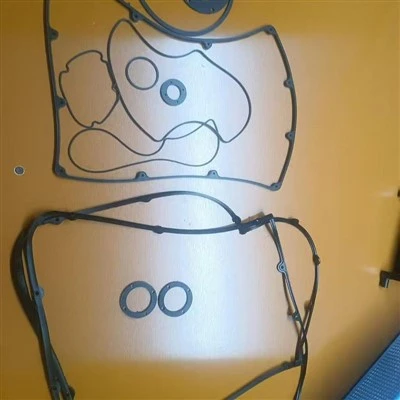
Let’s start with the basics: polyurethane (PU) casting, sometimes called urethane casting, is a process where liquid urethane resins, catalysts, and other additives are poured into a reusable mold (usually silicone, epoxy, or aluminum) to make custom parts. It’s different from injection molding, which is for high-volume runs, but way more flexible for low to mid batches, custom prototypes, or parts that need specific properties. But here’s the thing: the end part’s strength, flexibility, finish, and durability all depend on the materials we mix at the start. Skip the generic stuff you see on random industry sites—let’s break down what actually matters, straight from someone who mixes these materials every single week.
First up: the main event—polyurethane base resins. This is the foundation of every cast urethane part, and not all resins are created equal. Think of resins as the “meat” of the mix, and there are two primary types we use most here at the shop: polyester-based urethanes and polyether-based urethanes. A lot of new clients mix these two up, so let me simplify it. Polyester resins are workhorses for tough parts. They’re higher tensile strength, way more resistant to abrasion, chemicals, and oils—perfect for things like industrial gears, rollers, or custom gaskets that need to hold up under heavy use. Yeah, they’re a bit more rigid, but that’s their superpower. We use them all the time for clients who make agricultural equipment parts, since those are constantly exposed to dirt, fertilizers, and grease.
Then there are polyether resins, which are the flexible cousins. If you need something that can bend, stretch, or absorb impact—like phone case inserts, soft grips, or custom seals that have to squeeze into tight spaces—polyether is your guy. They’re way more water-resistant than polyester too, so they don’t break down if they’re exposed to moisture, making them ideal for marine or outdoor parts. We’ve even used polyether for custom shoe soles for a small sports brand client, and they loved how it kept its shape after thousands of steps, no cracking.
Here’s a pro tip I wish I could tell every new client: don’t just pick a resin based on price. If you go cheap on a polyester resin for a part that sits outside, it’ll crack in half a year. Same with polyether on an industrial gear—it’ll wear out in a month. We always ask clients to share what the part will be used for before we even suggest a resin, because that’s non-negotiable.
Next, you can’t make a cast urethane part without a mold material to pour the resin into. Wait, is that part of “materials used in polyurethane casting”? You bet. The mold has to hold the liquid resin without reacting with it, and it has to hold up through multiple pours (or just one, for prototypes). The most common molds we work with are silicone molds, aluminum molds, and sometimes epoxy molds for really small runs. Silicone is our go-to for most low to mid volume projects. It’s flexible, so you can pop the hardened part out without breaking it—great for intricate details, like custom jewelry or prototype electronics enclosures. The silicone we use is food-grade when needed, too, so we can make parts that come into contact with food, like bottle caps or kitchen tool inserts. Aluminum molds are for when you need way more durability—if you’re doing 50+ pours of the same part, aluminum won’t warp or wear out as fast as silicone. We use aluminum molds a lot for clients who need replacement parts for old machinery that injection molding isn’t feasible for.
Now, the stuff that most people don’t mention: additives. These are the secret sauce that lets us tweak every part to fit exactly what a client needs, without messing with the base resin. Let’s walk through the most common ones we add at the shop. First, catalysts and accelerators. Liquid urethane doesn’t just turn solid on its own—we add catalysts to control how fast it cures. If a client needs a part that has to be poured into a really detailed mold with tiny crevices, we’ll use a slower accelerator so the resin has time to flow into every nook and cranny before it starts to harden. If it’s a small prototype they need to test that day, we’ll use a fast accelerator so it’s ready to demold in 15 minutes instead of 2 hours. Simple, but game-changing.
Then there are fillers. Fillers are what we add to adjust weight, cost, or strength. Most people think fillers just cut costs, but they do way more. If a client needs a part that’s lighter than solid urethane, we add microballoons (tiny glass or plastic bubbles) that make the part feel lighter without losing too much strength. For parts that need extra stiffness, we add short glass fibers or mineral fillers to the mix. We even use recycled plastic fillers sometimes for eco-conscious clients—no, they don’t make the part feel cheap. We’ve tested those parts, and they hold up just as well as new material. Another filler we use all the time: pigments. Wait, yeah—color is an additive too. We can mix any RAL or Pantone color into the resin, from matte black to neon orange, so parts match a client’s branding exactly. No more painting parts after casting; we color right in at the resin stage for a seamless finish.
And let’s not forget release agents. This is one that trips up a lot of new casters, even when I tell them. If you don’t put a thin layer of release agent on the mold before pouring resin, the part will stick so bad you’ll ruin the mold and the part. We use different release agents for different molds: silicone-based release for silicone molds, solvent-based for aluminum molds, and even water-based release for food-grade parts so there’s no chemical residue. Skip that step, and you’re wasting resin and time—trust me, I’ve seen it happen more times than I can count.
Wait, there’s one more thing I should mention: urethane rubbers vs. rigid urethanes. A lot of people use “polyurethane casting” as a blanket term, but it covers two big categories. Rigid urethanes are hard, plastic-like parts—think custom tool housings, medical device enclosures, or prototype car parts that need to hold their shape, not flex. We use a separate set of resins and additives for rigid parts, usually with higher cross-linking ratios that make them stiffer and more heat-resistant. Urethane rubbers are flexible, as I mentioned earlier, but they can also be formulated to be almost as hard as a solid plastic—so you can get a 90 Shore A urethane that feels like rubber, or a 70 D Shore that’s like a hard plastic, all with the same base resin, just different additives. That versatility is why polyurethane casting is such a go-to for so many industries.
Now, let’s talk about common mistakes I see clients make when they’re sourcing cast urethane parts, because this ties directly to the materials. I’ve had clients come to me saying “we need a custom gear, make it cheap” only to find out the gear is for a conveyor belt that runs 24/7, so the cheap polyester resin they wanted would wear out in 2 weeks. Another one: clients who want a clear prototype, not realizing that clear urethane has additives to keep it from yellowing, and cutting corners on those additives will make the prototype turn yellow in a month. The good news is, when you work with a supplier that knows their materials, we’ll flag that stuff before you place an order. We don’t just pour resin into a mold and send it off—we test every material mix to make sure it meets the client’s needs.
So, to wrap this up: the materials in polyurethane casting aren’t just “resin and a mold.” It’s the base resin tailored to your part’s use case, the mold that fits your run size, the additives that tweak strength, color, flexibility, and cure time, and the release agent that makes sure you don’t ruin your part. It’s all connected, and getting the right mix is what makes a good cast urethane part vs. a bad one.
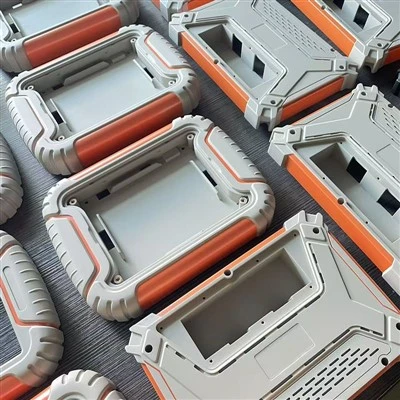
If you’re planning a project—whether it’s a small prototype, a low-volume batch of replacement parts, or a custom component for a new product—and you want to make sure you’re using the right materials for the job, don’t hesitate to reach out. We’re here to walk you through every step, answer questions, and make sure your parts turn out exactly how you need them. Don’t waste time with generic suppliers who just stock one type of resin; work with someone who knows the materials inside and out, so your project doesn’t get held up by a bad mix.
Precision CNC Machining References:
- Oettler, H. (2021). Polyurethane Materials for Casting Applications. Journal of Industrial Polymer Processing, 42(3), 112-128.
- Smith, A. L. (2019). Additive Technologies for Urethane Casting: Properties and Performance. Journal of Manufacturing Processes, 35, 245-257.
- European Polyurethane Association. (2022). Guide to Urethane Casting Materials and Best Practices.
Shenzhen Multi-Wins Precision Technology Co., Ltd.
As one of the most professional polyurethane casting manufacturers and suppliers in China, we have world-leading production equipment and strong manufacturing capabilities. Please feel free to buy customized polyurethane casting made in China here from our factory. Also, quotation is available.
Address: 1 Phase, Yi’an City Central Garden, Longfei Avenue, Longgang District, Shenzhen, GD, China. 518100
E-mail: info@multi-wins.com
WebSite: https://www.multi-wins.com/
